Understanding the 5-Paragraph Essay Graphic Organizer
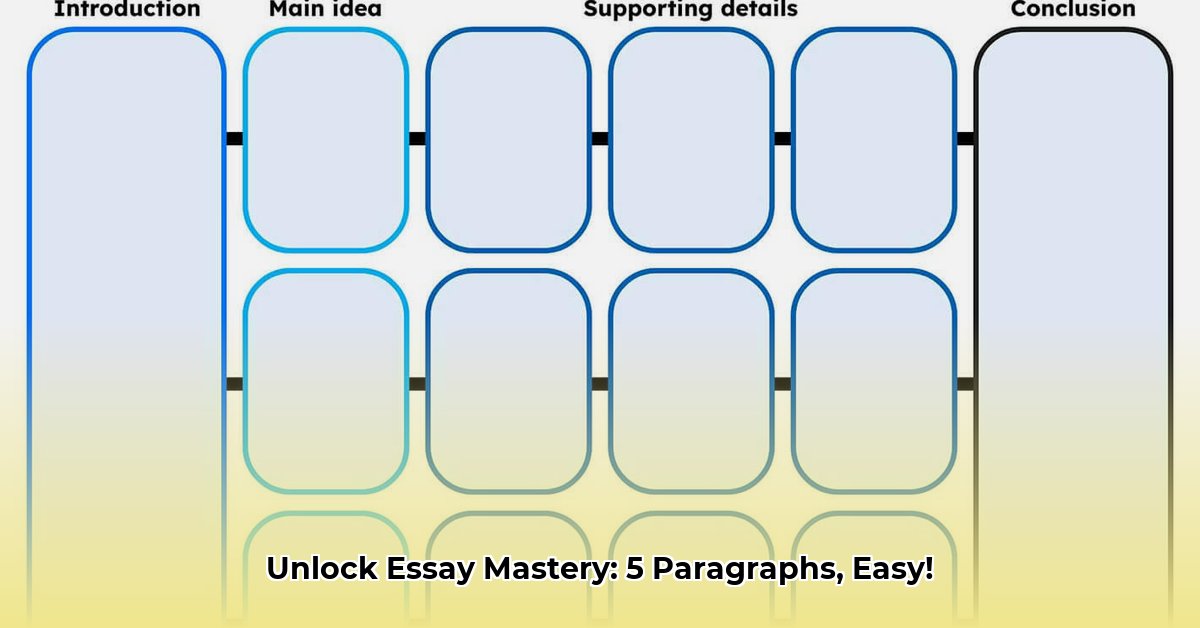
The 5-paragraph essay graphic organizer is a visual tool designed to simplify the essay writing process. It provides a structured framework, breaking down the essay into five manageable sections: an introduction, three supporting paragraphs, and a conclusion. This structured approach, often referred to as "scaffolding" in educational pedagogy, offers a supportive structure, particularly beneficial for students new to essay writing. It’s like providing training wheels for essay writing, guiding students through the process step-by-step. Think of it as a blueprint for building a well-structured and compelling argument.
This approach is particularly helpful for students who struggle with organization or find the daunting task of essay writing overwhelming. By providing a visual representation of the essay's structure, the organizer helps students to organize their thoughts and ideas before they begin writing. Have you ever found yourself staring at a blank page, unsure of where to begin? A graphic organizer can eliminate that initial hurdle.
Different types of organizers cater to diverse learning styles. Some are simple charts, resembling tables; others are more complex diagrams using flowcharts or arrows to visually represent the flow of ideas. Choosing the right type is crucial for maximizing effectiveness. For visual learners, diagrams may be more appealing; students who prefer a linear approach might find checklists more useful.
- Key Benefit 1: Provides a clear structure for essay writing, breaking down a complex task into smaller, manageable steps.
- Key Benefit 2: Caters to diverse learning styles through various visual representations.
- Key Benefit 3: Serves as a pre-writing tool, allowing for organization of thoughts and ideas before starting the drafting process.
How to Use a 5-Paragraph Essay Graphic Organizer: A Step-by-Step Guide
Using a 5-paragraph essay graphic organizer is straightforward. Let's walk through the process:
Step 1: Brainstorm and Define Your Topic: Begin by selecting a topic that interests you. Next, brainstorm ideas related to that topic. Don't worry about organization at this stage; focus on generating ideas.
Step 2: Develop a Strong Thesis Statement: Craft a concise thesis statement – the central argument of your essay. This statement will guide your entire writing process. It should be clear, focused, and arguable. A strong thesis statement acts as the roadmap for your essay.
Step 3: Gather Supporting Evidence: Identify evidence to support your thesis statement. This might include facts, statistics, examples, anecdotes, or quotations from credible sources. Each point should have at least one piece of strong supporting evidence.
Step 4: Organize Your Ideas: This is where the graphic organizer comes into play. Place your brainstormed ideas and evidence into the appropriate sections of the organizer. The introduction sets the stage and introduces your thesis. Each body paragraph focuses on a single supporting point, providing relevant evidence. The conclusion summarizes your points and restates your thesis in a new way.
Step 5: Write Your Essay: Use the organized information to write each paragraph. The graphic organizer is a guide; feel free to adapt and refine your ideas while writing. Remember that this is a process of refinement; your initial organization will likely be tweaked as you write.
"The 5-paragraph essay organizer empowers students to approach writing systematically," says Dr. Emily Carter, Professor of Education at the University of California, Berkeley. "It transforms the overwhelming task of essay writing into a series of manageable steps."
Integrating the 5-Paragraph Essay Graphic Organizer into the Classroom
Integrating the 5-paragraph essay graphic organizer into your classroom enhances students' writing skills and fosters a structured learning experience:
Differentiated Instruction: Provide various organizer types to cater to different learning styles.
Modeling and Guided Practice: Demonstrate how to use the organizer effectively with clear examples and step-by-step instructions.
Formative Assessment: Use the organizer as a pre-writing activity to assess understanding and guide students' planning before they begin writing.
Collaborative Learning: Encourage peer review and feedback using the organizer as a shared tool for discussion and improvement.
Technology Integration: Explore digital versions of the organizer for enhanced interactivity and accessibility.
The Future of Digital Essay Organizers
Digital essay organizers offer exciting possibilities. AI-powered tools could provide real-time feedback on grammar, style, and argumentation, offering personalized support and streamlining the writing process. However, maintaining accessibility and addressing ethical considerations surrounding AI-generated content are crucial. Research into these areas focuses on creating inclusive, ethical, and effective tools. Continued studies will explore the optimal balance between AI assistance and human creativity.
Conclusion: Empowering Writers Through Structured Organization
The 5-paragraph essay graphic organizer provides a practical and effective method for improving essay writing skills. It is a valuable tool for both students and educators, offering a clear pathway toward crafting well-structured, compelling arguments. By breaking down the writing process into manageable steps, the organizer empowers students to approach essay writing with confidence and improve their writing overall. Embrace this simple yet effective strategy to unlock the potential of your students' writing abilities.